The 2026 Biennial Alumni Career Seminar will take place on Saturday, November 7, 2026. Held in even-numbered years since 1964, the seminar connects University of Dayton mathematics students and alumni while bringing together three featured experiences in one day: the 26th Kenneth C. Schraut Memorial Lecture, the Dayton Data Challenge, and the Career Panel.
The schedule below is tentative and may be updated.
Schedule
Dayton Data Challenge Check-In & Presentation Testing
Participating teams check in and test their presentation slides before the competition begins.
Dayton Data Challenge Presentations
Undergraduate teams present insights from their week-long real-world data challenge.
Registration & Lunch
Check-in or onsite registration for the afternoon program begins. Additional lunch details will be announced.
Opening Remarks
26th Kenneth C. Schraut Memorial Lecture
Mine Çetinkaya-Rundel, Duke University
Beyond the Prompt: Programming as a Pathway to Statistical Thinking
Coffee Break
Career Panel
Dayton Data Challenge Award Announcement
Location
The 2026 Biennial Alumni Career Seminar will be held in the Science Center, home of the University of Dayton Department of Mathematics.
- Dayton Data Challenge presentations: TBD
- Check-in, lunch, and refreshments: Science Center Atrium
- 26th Kenneth C. Schraut Memorial Lecture: Science Center Auditorium (SC 114)
- Career Panel: Science Center Auditorium (SC 114)
Featured Events
26th Kenneth C. Schraut Memorial Lecture
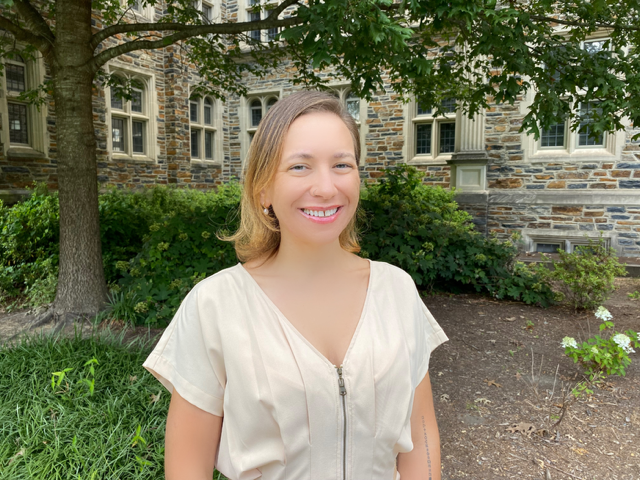
Mine Çetinkaya-Rundel
Duke University
Beyond the Prompt: Programming as a Pathway to Statistical Thinking
Abstract
AI tools can now generate polished visualizations, scaffold Quarto reports, and debug data pipelines in seconds. So should statistics and data science students still learn to do these things themselves? The case for teaching programming and reproducible workflows is stronger than ever. When AI can produce code freely, mastery means being able to assess whether that code is correct, recognize when an analysis quietly goes wrong, and structure work so every step can be followed and verified. More importantly, learning modern data science workflows teaches students to think with data: to ask sharper questions, understand what data can and cannot answer, and reason rigorously about uncertainty and statistical models. The code is how we practice these habits; reproducibility is a cornerstone of scientific integrity and an essential skill for working productively with AI. Drawing on experience designing introductory data science courses and curricula, this talk reframes programming instruction in the AI era as a pathway to statistical thinking rather than syntax acquisition. Through concrete examples and ideas for assignments and assessments, it considers how to reward genuine understanding when a plausible-looking answer is only a prompt away. The goal is not to keep AI out of the classroom, but to prepare graduates to critically evaluate what it produces.
About the Speaker
Mine Çetinkaya-Rundel is Professor of the Practice and the Associate Director of Undergraduate Studies at the Department of Statistical Science and the Director of First-Year Experience at Duke University. She is also a Developer Educator at Posit, PBC, an open-source data science software company, formerly RStudio Inc. Mine’s work focuses on innovation in statistics and data science pedagogy, with an emphasis on computing, reproducible research, student-centered learning, and open-source education. She also works on research projects that aim to assess the effectiveness of these approaches with respect to learning and retention.
Mine has co-authored four open-source statistics textbooks as part of the OpenIntro project at the introductory college and advanced high school level, is the creator and maintainer of Data Science in a Box and has been developing and teaching various massive open online courses, including the popular Statistics with R specialization on Coursera. In 2021, Mine was awarded the Robert V. Hogg Award for Excellence in Teaching Introductory Statistics.
Mine is one of the co-leads the international effort for putting on ASA DataFest, a two-day competition in which teams of undergraduate students work to reveal insights into a rich and complex data set, annually at over fifty institutions across the globe.
Dayton Data Challenge
The Dayton Data Challenge is a week-long undergraduate data competition in which teams work with real-world data, develop their own questions, and communicate their findings. The competition culminates with final presentations on Saturday morning, followed by the announcement of award-winning teams at the end of the seminar program.
Students registered for the Dayton Data Challenge are automatically included in the full-day Biennial Alumni Career Seminar program.
Career Panel
The Career Panel gives students an opportunity to connect with University of Dayton alumni and hear first-hand about career paths, professional experiences, and opportunities across the mathematical sciences and related fields.
Panelist information will be added as it becomes available.
Registration
Participation in the 2026 Biennial Alumni Career Seminar is free.
Registration deadline: Friday, October 30, 2026
Register for the 2026 Biennial Alumni Career Seminar
Already registered for the Dayton Data Challenge?
Students who are registered for the Dayton Data Challenge are automatically included in the full-day Biennial Alumni Career Seminar program and do not need to register again.
Support
The 2026 Biennial Alumni Career Seminar is made possible with support from:
- Department of Mathematics
- College of Arts and Sciences, University of Dayton
- The Leonard A. Mann, S.M., Chair in the Sciences at UD
- UD Mathematics alumni, including contributors to the endowed Kenneth C. Schraut Memorial Fund
We gratefully acknowledge Jo Sipes for her generous support of the 2026 Biennial Alumni Career Seminar.